



A major breakthrough has finally brought clarity to the long-running controversy surrounding the family of legendary Kadongo Kamu singer Paul Job Kafeero.
After months of anticipation and years of speculation, DNA test results have confirmed that only four out of the 25 individuals who claimed to be the late musician’s children are biologically related to him.
The findings were officially released by the Police Forensic Directorate following an extensive scientific verification exercise conducted at Police Headquarters in Naguru.
The development marks a significant turning point in efforts to determine the rightful heirs to Kafeero’s estate and preserve the legacy of one of Uganda’s most celebrated musical icons.
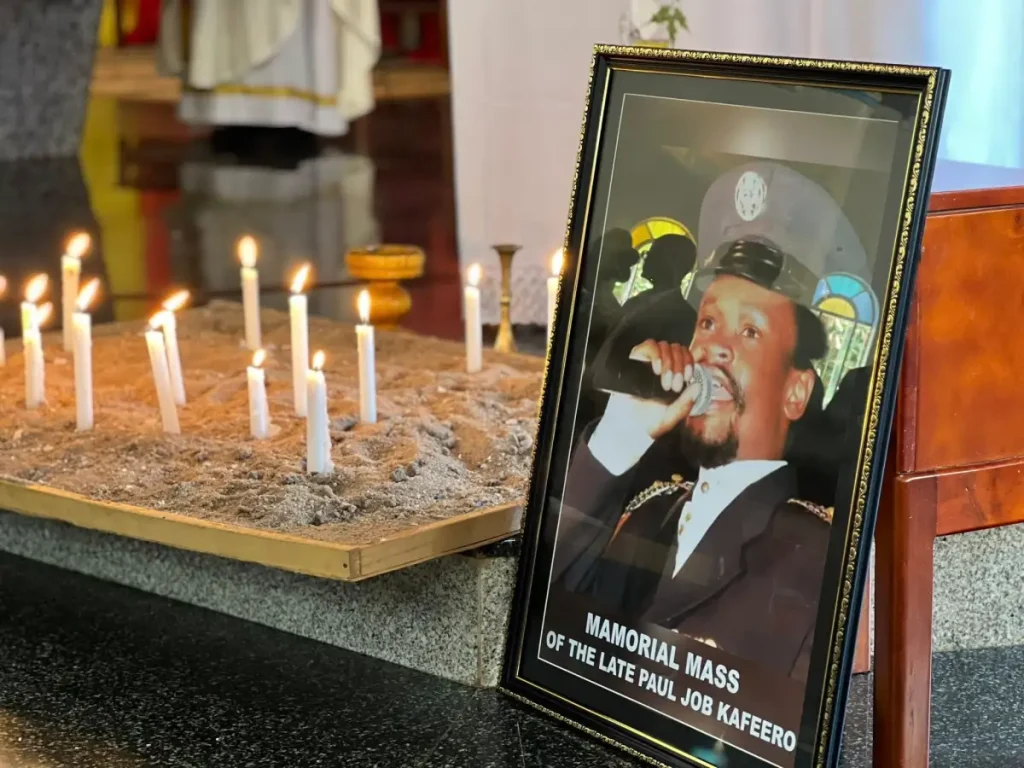
Paul Kafeero remains one of the most influential figures in Uganda’s music history. His timeless Kadongo Kamu songs continue to resonate with audiences years after his death.
However, disputes over his lineage have overshadowed his legacy for a long time. The DNA verification process was initiated to settle lingering questions regarding the paternity claims made by several individuals.
The exercise was supervised by Minister for Local Government Balaam Barugahara. It was also conducted with the involvement of Director of Forensics Andrew Mubiru.
The Director of the Government Analytical Laboratory, Kepher Kuchana Kateu, also played a key role in overseeing the process.
According to forensic experts, the investigation was aimed at establishing the true beneficiaries of the late singer’s estate.
Authorities sought to ensure that inheritance matters would be handled based on verified scientific evidence rather than claims and speculation.
The results revealed that only four individuals were positively identified as biological children of Paul Kafeero.
The confirmed children are Benedicto Kafeero.
Simon Peter Kafeero was also verified as a biological child of the late singer.
Thomas Swaz Kafeero was among those confirmed through the DNA analysis.
Elizabeth Nagawa completed the list of individuals whose biological relationship to Kafeero was established.
The remaining 21 claimants were not found to share a biological connection with the deceased musician.
The findings effectively close one of the most debated family disputes involving a prominent Ugandan entertainer.
Observers say the outcome could have significant implications for the management and distribution of Kafeero’s estate.
Legal experts note that the DNA findings may help prevent future conflicts among individuals seeking recognition as beneficiaries.
Family members and supporters of the late singer have welcomed the results as a crucial step toward restoring order and certainty.
Many believe the scientific verification process has provided answers that had eluded relatives and stakeholders for years.
The announcement has sparked widespread discussion among fans, cultural leaders, and members of the music industry.
Several observers have praised authorities for relying on forensic science to settle a matter that had generated considerable public interest.
For many Ugandans, Paul Kafeero’s music remains an enduring symbol of cultural pride and storytelling.
His songs often addressed social issues, relationships, and everyday life experiences that resonated deeply with audiences across generations.
As the dust settles on the paternity dispute, attention is expected to shift toward safeguarding his legacy and ensuring that his estate is managed in a transparent manner.
The DNA findings are likely to serve as a definitive reference point for future discussions regarding his family lineage.
While the results may disappoint some claimants, they have provided a clear and scientifically backed conclusion to a debate that has persisted for years.
For the four individuals confirmed as his biological children, the findings represent official recognition of their connection to one of Uganda’s most beloved music legends.
The conclusion of the DNA verification exercise is expected to bring closure to many of the unanswered questions surrounding Paul Kafeero’s family.
It also marks a historic moment in the use of forensic science to resolve inheritance and family disputes involving public figures in Uganda.

