



A Nairobi building collapse in the Eastleigh area left an unknown number of people feared trapped beneath the rubble after a multi-storey structure under construction came down at approximately 1 p.m. on Friday.
Rescue teams searched the wreckage as relatives tried to establish the whereabouts of missing loved ones, while authorities warned that the damaged structure could collapse further.
The building stood along a busy commercial street in Eastleigh, a neighbourhood frequented by traders and residents.
Nairobi police chief Issa Mohamud said the structure had more than 10 upper floors under construction, although authorities had not established how many people were inside when it collapsed.
Among those who escaped was Joseph Kaula, a plasterer who had been working on the fifth floor.
Kaula said he heard screams and saw other workers rushing towards the exit, warning that the building was collapsing.
He suspected some of his colleagues might have been trapped in the basement, although their whereabouts had not been confirmed in the available report.
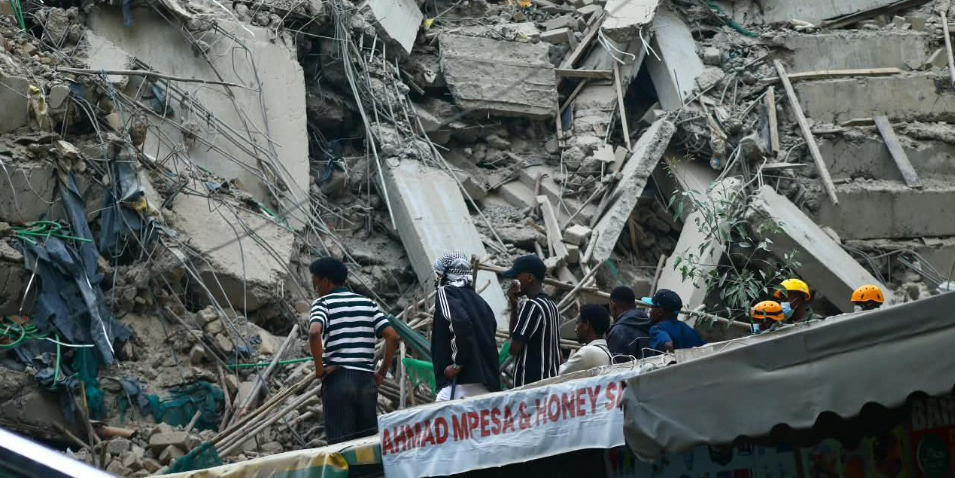
The collapse left a large pile of concrete and steel, complicating efforts to reach anyone who might have survived beneath the debris.
Mohamud reported that one injured woman had been rescued and taken to hospital. He also said another person who had been crying for help had gone silent, raising concern among those involved in the rescue operation.
The number of people still trapped, missing or rescued beyond the reported case remained unknown.
Residents said some of their loved ones had called them shortly after the building came down, seeking help from beneath the wreckage. Those calls later became unreachable, according to the residents.
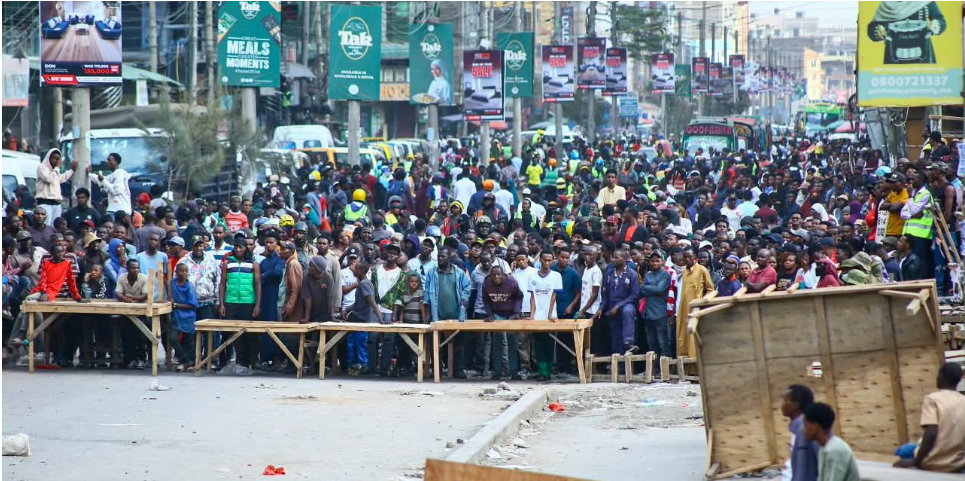
A tent was established at the scene where people could report missing relatives and seek information about those whose whereabouts were unknown.
Rescuers faced difficulties because heavy equipment was initially scarce at the scene.
Some used poles stripped from trees to probe the rubble, searching for possible spaces where survivors could be reached.
An excavator was later used to move concrete reinforced with steel, while at least two additional backhoes arrived by evening.
Rescue teams hoped to reach spaces around the basement and ground floor, where people might have been trapped. The operation also faced the risk of further structural damage.
Mohamud warned that the collapsed building was leaning against a neighbouring structure, creating the possibility of a secondary collapse.
Police also used tear gas to disperse people who had begun looting nearby shops as officers attempted to clear the area and allow emergency teams access.
The immediate priority remained reaching possible survivors, but the full scale of the incident could not be established from the information available.
The collapse also drew attention to questions about building approvals and compliance with safety regulations in Nairobi.
Governor Johnson Sakaja said the building had been approved for construction but did not have a certificate of occupation.
He said operating shops on the ground floor without that certificate was against the law.
The ground-floor premises had reportedly been rented out to businesses, including an electronics shop, a butchery and a grocery, even as construction continued on the upper floors.
Sakaja called for stronger enforcement powers for Kenya’s county governments, arguing that the penalties imposed on developers who violate regulations were insufficient.
His remarks raise a separate question from the immediate rescue operation: whether the building complied with the requirements governing its use while construction was ongoing.
However, the available information does not establish that the absence of a certificate of occupation caused the collapse.
The identity of the building’s owner, developer and contractor was also not provided, and there was no confirmed finding linking a specific regulatory failure to the incident.
Building collapses have been a recurring problem in Nairobi, according to the report.
County officials responsible for issuing building permits have previously faced accusations of failing to conduct adequate inspections to ensure developers follow construction standards and safety guidelines.
The latest incident has renewed attention to those concerns, particularly because businesses were reportedly operating on the ground floor while work continued above them.
Still, the circumstances surrounding this particular collapse remain under investigation, and allegations of inadequate inspections should not be treated as proof of its cause.
Authorities have not established whether structural defects, construction practices, regulatory failures or another factor contributed to the disaster.
Mohamud said investigations would be conducted and that anyone found responsible for negligence would face the law.
The investigation is expected to address questions of responsibility, but the source does not provide a timeline for its findings.
Further information is also needed to establish how many people were inside the building, how many remain missing and whether additional survivors were found after the reported rescue efforts.
The condition of the neighbouring building and the extent of any damage to it were also not confirmed.
The Nairobi building collapse has left urgent questions about missing people, rescue efforts and construction safety in Eastleigh.
While emergency teams worked to reach possible survivors, Sakaja’s remarks about the building’s occupation status brought regulatory compliance into focus.
The cause of the collapse and the number of people still unaccounted for remained unknown in the available report. The investigation will be crucial in establishing what happened and whether negligence played a role.

